Comment at the very bottom of the page! 😉
Show Notes
Recovery rarely happens in ideal circumstances. Work, family responsibilities, caring for others, financial pressures and everyday demands can continue even when your health is telling you to slow down.
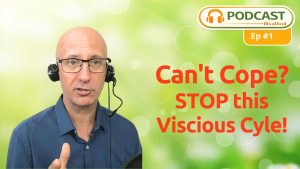
In this CFS Unravelled Snippet, Dan Neuffer explores how people experiencing Fibromyalgia, ME/CFS, PVFS or Long COVID, POTS and related conditions can approach recovery when life still demands a lot from them. He discusses the risks of continually pushing through, why recovery doesn’t always require an all-or-nothing decision, and how greater flexibility, self-compassion and a longer-term perspective can help you make choices that better support recovery.
Timestamps
00:00 "Can I Recover While...?" Managing Real-Life Responsibilities
00:54 What Happens When We Keep Pushing Past Limits
01:45 The "Selfishness Myth" in Chronic Illness Recovery
02:44 Looking at Long-Term Care for Loved Ones
04:00 Flexible Thinking: Adjusting Work & Standards
05:10 Showing Self-Compassion & Prioritizing Recovery
Links
Here is a link to the ANS REWIRE program.
Transcript
So one of the key questions I get asked is, "Can I recover whilst dot, dot, dot?"
Can I recover whilst I have small children? Can I recover whilst I have to look after my elderly parent? Can I recover whilst I'm working? I get it, you know? We don't live in a vacuum. We have real-life responsibilities, financial pressures, family responsibilities.
So how do we manage these things? I think the problem is that we tend to think that everything is up to us, that we have a choice in everything, and that we can just push through, that we are infallible. Most of us realize this is not quite true when we are chronically ill, but surprisingly, we tend to get sometimes really quite an amazing amount of things done.
But the reality is that if you're really sick, these choices go away. Maybe you simply can't do these things for your children or your parents or your community, your friends, your family, your loved ones, whoever. Maybe you can't turn up at the job. My point is, at the end of the day, either we choose, or if we keep going against the grain and pushing too hard, life chooses for us and makes the decision for us and takes it out of our hands.
And in my experience, that never feels good, and it never looks good either. I think one of the issues is this selfishness myth. You know, we have had a fairly privileged year since─life in the West, especially since World War II in many of the Western nations. And with that, we tend to think about not being selfish.
We think selflessness is a virtue, but I would suggest to you that being selfish may be the most selfless thing you can do because ultimately, you've got to look at the situation longer term. Let's look at the children or parent scenario. Yes, of course, I understand they want things or need things, and you can feel you need to do those things.
But ultimately, what would your parent want for you for the next 10 years? If they could see you recovering or being sick and pushing through all the time, what would be most important to them? Another thing is, what about your children? Yes, they might miss out on some things, but I look at it and go, "You know, I'll be honest, I don't care what your children miss out on this year. But I do care what your children might miss out on over the next five years or over the next 10 years." And I think ultimately, if we want to serve our community and our loved ones, we have to be able to show up, and nothing is really more important than recovering so that we can be there for our loved ones.
And so I think being selfish is perhaps the most selfless thing you can do. It's like when you're on the airplane. You know, they say that if the plane goes to crash and the oxygen masks drop, put the mask on yourself first, not the child. Because if you put it on a child and then you pass out, the plane crashes, everyone's getting out because it's on fire, and you're lying there snoozing.
It makes no sense. So put it on yourself. If your kid snoozes, it doesn't matter. They might be less upset on the way down, right? You can just rattle them awake. Put the mask on them, rattle them awake when you get to the bottom, take them out, carry them, right? So being selfish is the least selfish thing you can do sometimes. And the other thing about all of this is we need to be a bit more flexible in our thinking.
It's so easy to go, "Oh, well, it's this or that. Do I work? Do I quit?" You know, it's about being a bit more flexible. Like, well, what if you reduce your hours? Or what if you change your work hours? It's often more about some acceptance and less perfection and more compassion for yourself. If you look at it, you can simply keep the wheels on the bus, right?
And feel less stressed out, you have a little bit more capacity to invest in your recovery. You know, it's easy to sort of apply these uncompromising standards, and we think of it as a virtue, but just think about it. If there was a 14-year-old boy or girl and you expected them to follow these perfect, uncompromising standards, would that be okay?
Would you feel that would be being kind and compassionate? In many cases, I think when I speak to people, if we were to apply the standards that they apply on themselves to a 14-year-old child, it would be considered child abuse, right? So my message to you is
Don't think black or white, but prioritize yourself. Seek to do what you have to. If you have to make some big, hard choices, do it. But start thinking more about the medium term. If you've got a plan, if you're in the program or you're doing some other things, maybe you've read the book, and you're trying to do it yourself, and you have a plan, and you're making progress, it's time to double down.
Don't let some short-term need slow you down from making a full recovery from this illness. I hope you found that helpful. If you haven't already subscribed to the channel, just press that little subscription button, make sure you get the notifications, and I would appreciate a like and a comment just to help get the word out to more people. Be kind to yourself. I look forward to seeing you in the next video.